
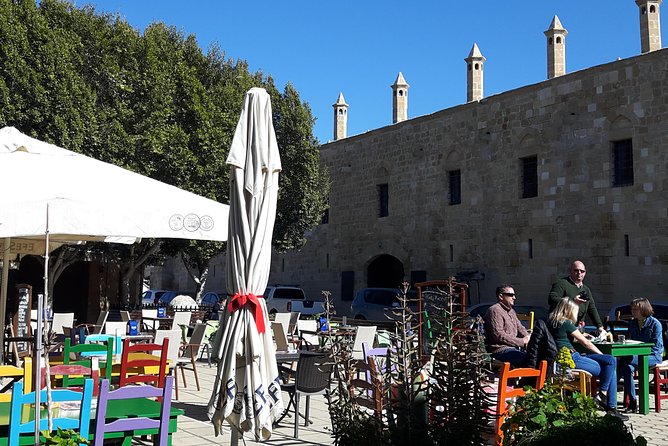
REVIEW · NICOSIA TOURS
Divided Capital NICOSIA
Nicosia tells Cyprus’s story in two halves. This private three-hour walk links the city’s Turkish Cypriot and Greek Cypriot sides, moving from Ottoman neighborhoods and medieval walls to a modern border crossing. I especially like the small private format, which lets your guide adjust the pace, and the chance to see major sights without treating the city like a checklist. The stop at Büyük Han also gives you time for Cypriot coffee and traditional börek, a welcome pause after several historical landmarks.
The main consideration is balance. The guide’s understanding of northern Nicosia may be stronger than the explanation of the southern side, so your experience can depend on who leads the walk. You will also need a valid passport at the checkpoints, and the fixed, non-refundable booking terms call for care when choosing your date.
In This Review
- Key points to know before you book
- Why this tour makes sense in divided Nicosia
- Starting at Ledra Street, where the city is split
- Kyrenia Gate and the old city walls
- Samanbahçe Quarter and its central cistern
- The Venetian Column and a moved monument
- Selimiye Camii, cathedral turned mosque
- Büyük Han, a welcome 40-minute pause
- Famagusta Gate and the city’s defensive ring
- Archbishop’s Palace and the southern side
- What the private format changes
- Price, timing, and the real value
- Who will enjoy this walk most
- Should you book Divided Capital NICOSIA?
- FAQ
- How long does the Nicosia tour last?
- Where does the tour start and finish?
- How much does the private tour cost?
- Do I need to bring a passport?
- Is lunch included?
- When does the tour operate?
Key points to know before you book
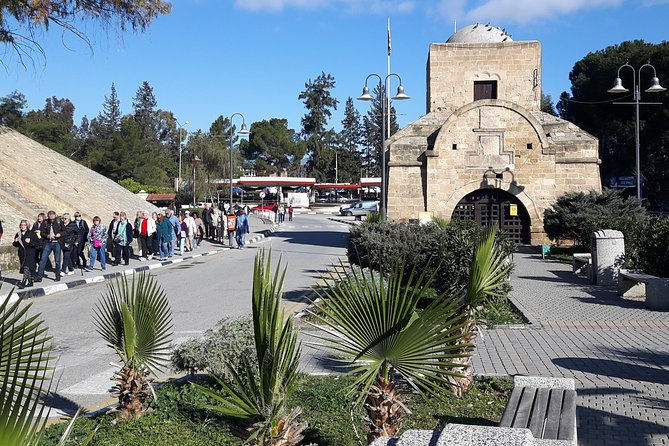
- Cross-border route: Begin and end at the Ledra Street crossing point in central Nicosia.
- Eight central stops: See Kyrenia Gate, Samanbahçe Quarter, Büyük Han, Selimiye Camii, Famagusta Gate, Archbishop’s Palace, and more.
- Private for up to four: The $216.86 price covers your whole group, not each person individually.
- History across centuries: The route connects Lusignan Gothic architecture, Venetian rule, Ottoman buildings, and the modern division of Cyprus.
- A useful café pause: Spend about 40 minutes at Büyük Han, where you can rest with Cypriot coffee and börek.
- Bring your passport: You must show valid identification at the crossing points.
Why this tour makes sense in divided Nicosia

Nicosia is not a city you fully understand by looking at one side. The old center is cut by a border, and the buildings around it carry traces of several periods: Lusignan, Venetian, Ottoman, British, and modern Cyprus. A guide helps connect those pieces instead of leaving you with a pile of attractive but unrelated monuments.
This is a walking-focused private outing for your own group of up to four people. At $216.86 per group, the value improves sharply if four people share the cost. For one person, it is expensive for three hours. For a small family or group of friends, the private format can be reasonable, especially if you prefer questions, a flexible pace, and direct help with understanding the border.
The advertised schedule runs Monday through Saturday from 9:00 a.m. to 1:00 p.m. The tour begins and ends at Ledras in central Nicosia, so you do not need to arrange separate transport between the main sights. You should still allow extra time to reach the meeting point and have your passport ready.
The tour is rated 4.9 from 25 ratings, with 96 percent recommending it. That points to a consistently strong experience, while the lower-scoring assessment offers a useful warning: the northern side may receive fuller explanation than the southern side.
More trips to Nicosia:
- 3-hour Nicosia Segway Tour
★ 5.0 · 323 reviews - Nicosia: Green Line and Buffer Zone Guided Walk
★ 5.0 · 147 reviews - NORTHERN CYPRUS ALL-IN-ONE Private Day Trip from Nicosia
★ 5.0 · 89 reviews
Starting at Ledra Street, where the city is split
The meeting point at Ledras places you right beside one of Nicosia’s border crossings. This is not just a practical starting point. It introduces the central fact of the city before you have taken a single step: Nicosia is one capital with a dividing line running through its historic core.
The tour starts and finishes at the Ledra Street crossing point, with roughly 20 minutes set aside here. Your guide explains how the crossing works and helps place the rest of the walk in context. Since valid passports are required at checkpoints, keep yours accessible rather than buried in a day bag.
This opening also makes the tour convenient if you are already exploring central Nicosia. The route is near public transportation, and the experience is offered in English. Children under 12 must be accompanied by a parent.
Kyrenia Gate and the old city walls
Kyrenia Gate is one of the oldest entrances into the walled city. You spend about 20 minutes here, enough for photographs and an explanation of the gate’s role in the city’s defenses and daily movement.
The value of this stop is visual. The walls help you understand the shape of old Nicosia, while the gate gives you a clear starting point for the older urban center. Rather than seeing the city as a modern capital with scattered monuments, you begin to see it as a fortified settlement that grew and changed over time.
Do not expect an extended archaeological visit. Admission is free, and the stop is mainly about orientation, history, and the surrounding streets. Comfortable shoes matter because the tour covers several areas on foot.
Samanbahçe Quarter and its central cistern
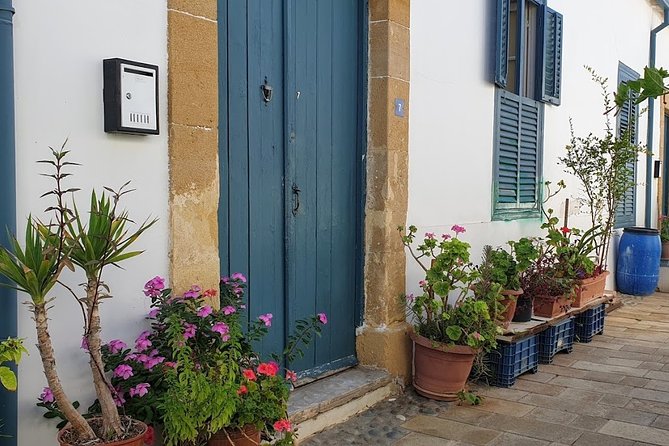
The Samanbahçe Quarter offers a quieter look at Ottoman-era city life. It was built in 1900 by Ottoman Saban Pasa, with 72 homes provided for people in need. A cistern sits at the center of the quarter.
This is one of the most human stops on the route. Great monuments often tell you about rulers and religious institutions. Samanbahçe shows a planned residential area and the practical side of community life. The homes and central water feature give you something more grounded than another grand façade.
The stop lasts about 10 minutes, so your guide’s explanation matters. You will not have long to study every detail. I would use this moment to ask how the quarter fit into the wider Ottoman city and how its housing purpose shaped the neighborhood.
A completely different kind of day out:
- Lefkara & Nicosia’s Divided Past & Present from Paphos
★ 4.0 · 80 reviews - Walking City Tour Nicosia North
★ 5.0 · 78 reviews - Larnaca Highlights with visit to Lefkara and Nicosia from Paphos
★ 4.5 · 62 reviews - Kyrenia Tour (only from Nicosia/Kyrenia Hotels)
★ 5.0 · 22 reviews
The Venetian Column and a moved monument
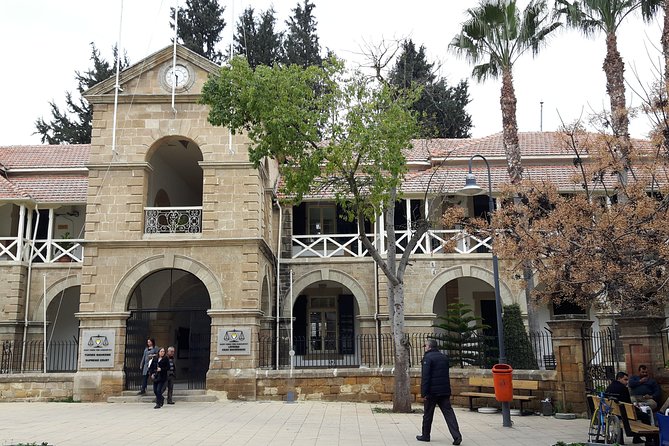
The Venetian Column carries a particularly curious story. It was brought to Nicosia from the ancient city of Salamis during the Venetian period. A Lion of St. Mark once sat on top, linking the column to Venetian power.
You spend about 10 minutes here. That short stop works well because the column is less about entering a building and more about hearing how objects are moved, reused, and given new political meaning. Its story links ancient Cyprus with Venetian rule and the symbols used by the republic.
This is also a good example of why a guide adds value. Without context, you might see a column and move on. With the story, you can read it as a piece of political history rather than a leftover stone.
Selimiye Camii, cathedral turned mosque
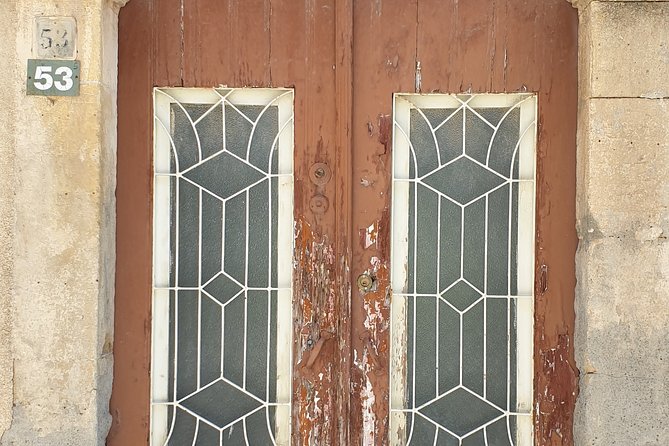
Selimiye Camii is among the most important architectural stops. It began as a cathedral built by the Lusignans in Gothic style. After the Ottomans arrived in Cyprus in 1570, minarets were added and the building was converted into a mosque.
The building was known as the Agia Sophia Mosque until 1956, when it received the name Selimiye Mosque. In about 20 minutes, your guide explains the changes that turned one religious structure into another while leaving its earlier architectural character visible.
This is where the route’s historical layering becomes especially clear. Gothic cathedral forms and Ottoman additions occupy the same building. I would pay close attention to the contrast between the original cathedral design and the later mosque features, since that change tells you more about Cyprus than a simple date list can.
Admission is free, but appropriate behavior remains important in a religious building. Your guide can help you understand what areas are available to enter and how to act respectfully.
Büyük Han, a welcome 40-minute pause
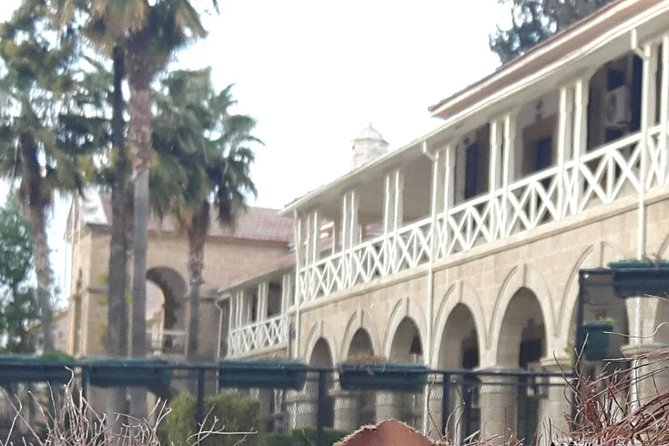
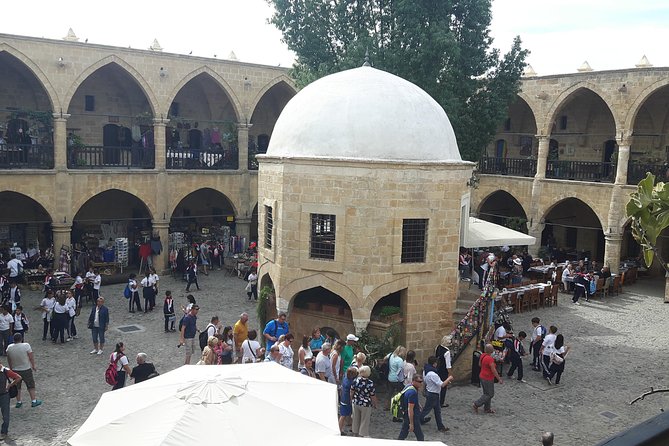
Büyük Han is the tour’s longest stop, at about 40 minutes, and that is a sensible choice. Built in 1572 by Muzaffer Pasha, the inn has a cistern and a small prayer space, or mescit, at its center. Today, it is one of the most appealing places to pause in the old city.
This is where the tour slows down. You can stretch your legs, have Cypriot coffee, and try traditional börek. Lunch is not included, so do not treat this as a full meal unless you arrange your own food. The break is still useful after the walking and gives you time to ask follow-up questions.
I like this stop because it connects history with ordinary enjoyment. You are not simply looking at a preserved building. You have a chance to sit, drink, eat something local, and notice how the space works as a social setting.
The private format is especially helpful here. A guide can suggest where to stop and offer lunch ideas for afterward. One praised detail was the guide’s restaurant advice following the tour, which makes the experience more useful beyond the official route.
Famagusta Gate and the city’s defensive ring
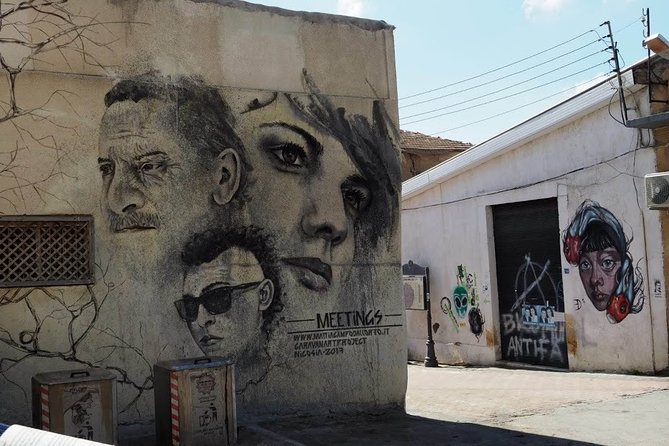
Famagusta Gate is one of the three gates surrounding Nicosia’s old city. The schedule allows about 40 minutes, including a walk-by, photographs, and an explanation of its history.
The longer timing may reflect the distance covered and the chance to see the gate from different angles. This is not described as a separate ticketed attraction, so expect an exterior-focused visit rather than a long indoor tour. Your guide’s storytelling is the main reason to spend time here.
Taken with Kyrenia Gate, Famagusta Gate helps you understand how the fortified city was organized. The two gates also make a useful comparison point. Look at how each entrance relates to the surrounding streets and ask your guide how the three gates served the city.
Archbishop’s Palace and the southern side
The stop at Archbishop’s Palace lasts about 20 minutes and is mainly for photographs and historical explanation. It gives the route a clear connection to the Greek Cypriot side of Nicosia and to the island’s religious and civic story.
This is the section where expectations should be realistic. The program says you stop by the palace rather than take a detailed interior tour, so the experience is about the exterior, setting, and background. If you want a long treatment of southern Nicosia, ask questions early and make your interests clear.
One assessment of the tour praised the guide’s command of northern Nicosia but felt the southern side received less explanation. That does not cancel the value of the stop, but it is a fair reason to book this tour mainly for the overall divided-city experience, not as the final word on every part of Greek Cypriot Nicosia.
What the private format changes
A private tour is more than a smaller group photo. With only your party, you can ask why a building changed use, pause for a photograph, or spend less time at a stop that does not interest you. The guide can also adjust timing, a flexibility specifically praised in the strongest comments.
The named guide Sirin received especially warm praise for patience, attentiveness, friendliness, and clear explanations of Nicosian and Cypriot history. Her ability to offer lunch suggestions and keep the pace comfortable added practical value. Since guide assignments can vary, treat this as an indication of the standard you may hope for rather than a guarantee that Sirin will lead every departure.
The short break for a drink is another small but important strength. Three hours can pass quickly when you are crossing a border, walking between gates, and listening to historical explanations. A seated pause keeps the experience from becoming a march.
Price, timing, and the real value
The cost is $216.86 per group of up to four people. Split four ways, that is roughly $54 per person. Split between two people, it is about $108 each. For a couple, the price is a significant outlay, but the private attention and cross-border planning may justify it if you want a guide rather than a self-guided walk.
The duration is approximately three hours, with the listed stops adding up to a full morning. The schedule is best for someone who wants a concentrated introduction, not a slow museum day. You will cover several important places, but you will not explore every lane or enter every building at length.
Because the tour operates from 9:00 a.m. to 1:00 p.m., it fits neatly into a morning plan. You can follow it with lunch, using the guide’s suggestions, or continue exploring on your own. The booking is non-refundable and cannot be changed for any reason, so confirm your date, group size, and border documents before paying.
Who will enjoy this walk most
I would recommend it most strongly to history buffs, first-time visitors to Nicosia, and small groups who want a clear explanation of the city’s division. It also suits families with older children, provided anyone under 12 is accompanied by a parent.
You are likely to get the most from it if you enjoy asking questions and comparing layers of history. The route is not built around shopping or entertainment. It is about walls, religious buildings, neighborhoods, political symbols, and the practical experience of crossing between two parts of the capital.
You may want another plan if you need extensive time inside museums, a full lunch, or a detailed treatment of southern Nicosia. The tour includes free admission at the listed stops, but food is extra, and several locations are viewed from outside.
Should you book Divided Capital NICOSIA?
Book it if you want a private, compact introduction to both sides of Nicosia and value a guide’s explanation more than a long list of interior visits. The combination of border crossing, Ottoman residential history, Gothic architecture, Venetian symbolism, and old city gates gives the morning real range.
I would be cautious if your schedule is uncertain, since the booking cannot be refunded or amended. I would also ask about the guide’s experience with both sides of the capital if southern Nicosia is your main interest. For a group of four with passports ready and a strong interest in Cyprus’s past, this is a practical and well-paced way to get oriented.
FAQ
How long does the Nicosia tour last?
The tour lasts approximately three hours. The listed route includes eight stops and begins and ends at the Ledra Street crossing point.
Where does the tour start and finish?
It starts at Ledras, Nicosia 1011, Cyprus, near the Ledra Street crossing point. The activity ends back at the same meeting point.
How much does the private tour cost?
The price is $216.86 per group of up to four people. It is not charged separately for each person in the group.
Do I need to bring a passport?
Yes. You must bring a valid passport to show at the checkpoints.
Is lunch included?
No. Lunch is not included. The route includes time at Büyük Han for a drink and possibly Cypriot coffee and börek, and the guide can provide suggestions for restaurants afterward.
When does the tour operate?
It operates Monday through Saturday from 9:00 a.m. to 1:00 p.m. The experience is offered in English.
Just added in Nicosia
- From Paphos to Divided Nicosia (North Cyprus walk in) and Larnaca★ 3.5 · 10 reviews
- 2-Hour The Best of Nicosia Private Walking Tour★ 5.0 · 2 reviews
- Private Tour to the Highlights of Kyrenia★ 5.0 · 14 reviews
- Kyrenia Mountain Villages & Wine Tasting from Nicosia or Kyrenia★ 4.5 · 7 reviews
- Private Transfer from Nicosia to Larnaca Airport in 6 seater Taxi★ 5.0 · 1 review
- Kyrenia Half Day Tour with St Hillarion from Nicosia & Kyrenia★ 4.5 · 6 reviews
- Nicosia Private Walking Tour with a Local★ 4.0 · 11 reviews
- Nicosia and Kyrenia Private Tour From Nicosia & Kyrenia★ 5.0 · 9 reviews
Nicosia Tours, compared.
Lefkara & Nicosia’s Divided Past & Present from Paphos
Read our review →
Larnaca Highlights with visit to Lefkara and Nicosia from Paphos
Read our review →
Kyrenia Tour (only from Nicosia/Kyrenia Hotels)
Read our review →
A Day Trip to Medieval FAMAGUSTA (Kyrenia, Nicosia or Famagusta )
Read our review →
Where else this tour turns up